
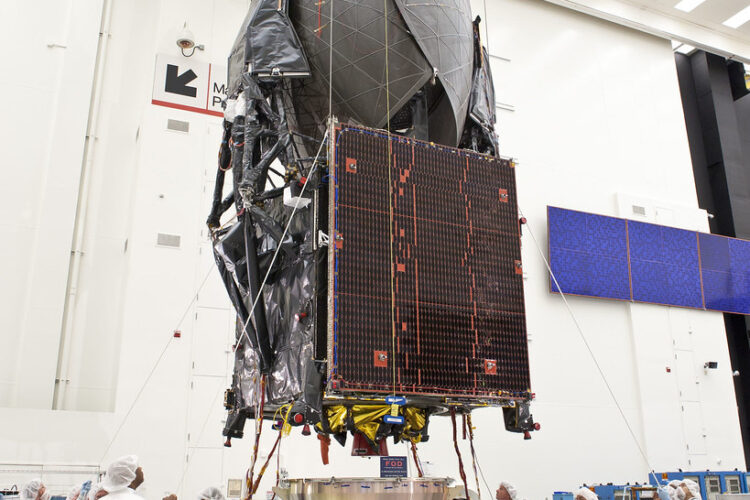
Navigation-communication satellites are gaining traction as Sanyark Space secures $2M in pre-seed funding. This investment underscores the growing interest in innovative satellite technologies.
Overview of Sanyark Space
Sanyark Space is a pioneering company in the realm of navigation-communication satellites, dedicated to revolutionizing the way we connect and navigate in today’s technology-driven world. Founded by a team of experts with extensive experience in aerospace engineering and satellite technology, Sanyark aims to provide innovative solutions that enhance global positioning and communication systems.
Recently, Sanyark Space successfully raised $2 million in pre-seed funding, which will be crucial for advancing their projects and expanding their capabilities. This funding will allow the company to develop cutting-edge navigation-communication satellites that promise to improve accuracy, reliability, and accessibility for users worldwide.
The vision of Sanyark Space encompasses a future where navigation data and communication capabilities are seamlessly integrated, enabling users to rely on efficient and precise information. With the increasing demand for enhanced connectivity in various sectors—such as transportation, logistics, and telecommunications—the potential for growth in the navigation-communication satellites market is immense.
As Sanyark Space embarks on this exciting journey, their commitment to innovation and quality positions them as a key player in the satellite industry, poised to make significant contributions to global navigation and communication solutions.
Importance of Navigation-Communication Satellites
Navigation-communication satellites play a crucial role in modern technology, providing essential services that support various sectors. These satellites facilitate accurate positioning, navigation, and timing services, which are vital for numerous applications.
One of the primary benefits of navigation-communication satellites is their ability to enhance global connectivity. They enable seamless communication across vast distances, making it possible for individuals and businesses to stay connected regardless of their location. This is particularly important in remote areas where traditional communication infrastructure is lacking.
In addition, navigation-communication satellites are integral to the functioning of global positioning systems (GPS). These systems are not only used for personal navigation but are also critical for industries such as transportation, aviation, and logistics. Accurate location data helps streamline operations, improve safety, and reduce costs.
Furthermore, the significance of navigation-communication satellites extends to emergency response and disaster management. They provide real-time data that can guide rescue operations and aid in effective decision-making during crises.
As technology continues to advance, the demand for navigation-communication satellites is expected to grow, highlighting their importance in our increasingly interconnected world.
Funding Landscape for Startups
The funding landscape for startups in the field of navigation-communication satellites has become increasingly robust, driven by the growing demand for advanced satellite technology. Recent investments highlight the potential for innovation and expansion in this sector.
Investors are recognizing that the capabilities offered by navigation-communication satellites are essential for various applications, ranging from global positioning systems to enhanced telecommunications. As a result, funding opportunities have surged.
Notable trends in the funding landscape include:
- Increased Investor Interest: Venture capitalists and angel investors are actively seeking opportunities in satellite technology, particularly in startups that focus on navigation and communication.
- Government Support: Many governments are providing grants and incentives to promote the development of satellite technologies, further attracting startups to this lucrative market.
- Collaborative Ventures: Partnerships between private startups and established aerospace companies are becoming common, allowing for shared resources and expertise.
As exemplified by Sanyark Space’s successful $2 million pre-seed funding round, the future looks promising for startups focused on navigation-communication satellites. The infusion of capital not only validates their business models but also paves the way for groundbreaking advancements in satellite technology.
Impact of Satellite Technology
The advent of navigation-communication satellites has revolutionized various sectors, enhancing connectivity and precision across multiple domains. These satellites play a critical role in providing accurate location data and seamless communication, which are essential for both commercial and governmental operations.
One of the most significant impacts of satellite technology is its contribution to global positioning systems (GPS). With the integration of navigation-communication satellites, users can achieve real-time location tracking, which is invaluable for logistics, transportation, and emergency services. This capability has not only improved efficiency but also enhanced safety standards in various industries.
Moreover, the technology has transformed the way people communicate. With high-speed internet access provided by these satellites, remote regions can now participate in the digital economy. This advancement is particularly vital for developing countries, where traditional communication infrastructures may be lacking. As a result, communities can access educational resources, healthcare information, and economic opportunities that were previously out of reach.
In summary, the impact of navigation-communication satellites extends far beyond mere convenience; it drives innovation and fosters inclusivity in an increasingly interconnected world.
Future of Satellite Navigation
The future of satellite navigation is poised for significant advancements, driven by ongoing innovations and evolving technologies. As demand for accurate positioning and reliable communication continues to grow, navigation-communication satellites play a crucial role in various sectors.
One of the key trends shaping the future of these satellites is the integration of artificial intelligence and machine learning. These technologies can enhance data processing capabilities, leading to improved accuracy and efficiency in navigation systems. Additionally, the miniaturization of satellite components allows for the deployment of smaller, more cost-effective satellites that can operate in swarms, providing more robust coverage and redundancy.
Moreover, public-private partnerships are becoming increasingly important in the development of navigation-communication satellites. Collaboration between government agencies and private companies can lead to innovative funding models and shared resources, ultimately accelerating the deployment of advanced satellite networks.
As the industry progresses, challenges such as orbital congestion and space debris management must be addressed. The future success of navigation-communication satellites will depend on the ability to navigate these challenges while delivering reliable services to users worldwide.
Overall, the trajectory for satellite navigation promises exciting developments that could reshape how we interact with technology and the world around us.
Investment Trends in India
Investment trends in India indicate a growing interest in the sector of navigation-communication satellites. As the country continues to develop its space capabilities, several factors are driving this investment surge.
- Government Initiatives: The Indian government has recognized the strategic importance of satellite technology, leading to various initiatives aimed at enhancing the infrastructure and capabilities of navigation-communication satellites.
- Private Sector Engagement: More private companies are entering the market, attracted by the opportunity to innovate and develop advanced satellite systems. This shift is fostering a competitive landscape that encourages technological advancements.
- Increased Demand: The demand for navigation-communication satellites is on the rise, driven by sectors such as transportation, agriculture, and telecommunications. These sectors require precise location data and reliable communication solutions.
- Funding Opportunities: Recent funding rounds, like the $2 million pre-seed investment raised by Sanyark Space, highlight the enthusiasm of investors towards startups focusing on navigation-communication satellites.
As investment continues to grow, the prospects for innovation and development in this field appear promising, contributing to India’s position as a key player in the global satellite industry.
Challenges Facing Satellite Startups
The rise of satellite startups has been remarkable; however, they face numerous challenges in the competitive landscape of navigation-communication satellites.
One major hurdle is securing adequate funding. While many investors are eager to support innovative technologies, they often hesitate when it comes to the high costs associated with satellite development and launch. Startups must convince potential investors of their long-term viability and the unique value they bring to the market.
Additionally, regulatory requirements pose another significant challenge. Navigating the complex legal landscape surrounding satellite launches can be daunting. Startups must comply with both national and international regulations, which can delay project timelines and increase costs.
Moreover, technological advancements are rapidly evolving, demanding startups to stay ahead of the curve. The need for cutting-edge technology in navigation-communication satellites means that startups must continuously innovate to remain competitive.
Finally, establishing reliable partnerships is essential but can be difficult. Collaboration with established aerospace companies or governmental agencies can provide much-needed support but also requires navigating intricate business relationships.
Overall, while the opportunities in the satellite industry are vast, overcoming these challenges is crucial for the success of navigation-communication satellites startups.
By NASA Goddard Photo and Video via Openverse
Where this came from
EPF balance not showing? Discover the Simple Reasons · Bitcoin Options Expiry Slows Rally: Proven Insights Ahead · Sensex Nifty Losing Streak: Worst Week for Markets Ever